Tuesday, October 7, 2008

1980's Fashion: Do it BIG

The '80's were so over the top, styles usually evoked one of two reactions-either you loved it or hated it! There was nothing meek about it. Clothes were wild, bold, and overdone. A lot of the looks were retro too: '80's does '50's, '40's, almost every fashion decade found a place in the '80's. First a sidebar regarding the 1980's and vintage clothing: many "vinties" do not consider the '80's as old enough to be vintage. The Vintage Fashion Guild does not even include the '70's in their fashion timeline. Becky and I (aka Heffy's Collections) feel this is a sad oversight. I covered the '70's in last week's blog and there was almost too much going on in style trends to do it all in one blog. And it was a big era. As for the '80's...well, frankly, we love it! So it too is included here and in the clothes we seek out for our store. We just couldn't do vintage without the '80's! So take a look and make your own choice whether you want to include it your personal look. Leave a comment with your vote! Would you include it in vintage?

There are several style points leading to the consideration of the "80's as over the top. I will go through a few here. First is the outrageous, bright, bold colors used. Turquoise with berry pink, yellow with red, or combinations of neon colors were very much in vogue. If you thought of a color palette one would dare not use, it can be found in '80's clothes! Arguably the biggest go-to trend was shoulder pads. Squared off, huge shoulder pads could be found in jackets, blouses, or suits. Now most shoulder pads are removable, but in the '80's, they were sewn in to stay. I look like a linebacker in just a t-shirt, so this was a particularly trying time for me. I got to be good at assessing how something would look without the pads and then would remove them before venturing out anywhere. The look has stayed, albeit softened, so it helps a lot of people look polished. Miniskirts were popular, usually in denim. They were often worn with oversized tops or sweaters and leg warmers. To be really cool, the top was belted over the skirt. Pencil skirts came back. Pants varied from parachute pants (first debuted by MC Hammer) to stretch pants with or without stirrups.

Along with the oversized tops, killer shoulder pads, and outrageous colors, we had big hair and huge earrings. There was nothing wishy-washy in the '80's looks. Everything went over the top. It was fun, it was showy, it was uniquely the '80's.
Here are a few examples of 1980's fashion, starting with a bold, colorful beaded pattern on black in a sweater dress.
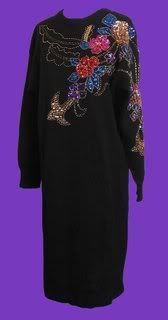
Chadwick's sweater dress

Blue on white boldly accentuates this abstract patterned jumpsuit with shoulder pads and a wrap front top:
Splash jumpsuit

The '80's brought back the bubble dress:
Black bubble dress with pouf sleeves

This black cocktail dress is a good example of the "over" in the '80's with it's pleats and stiff huge ruffles:
Tadashi dress

This blouse is in bold colors with batwing sleeves that are oh so '80's:
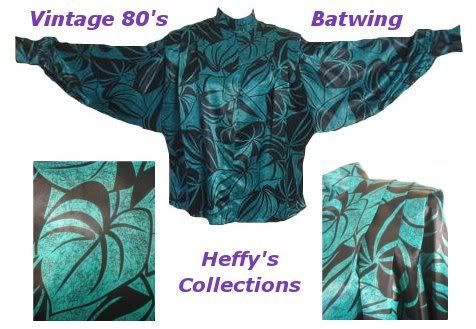
Mervyn shirt

Thursday, October 2, 2008

Anything Goes '70's

Ah, the '70's. What seemed like a disorganized confluence of styles actually became an era of wear what suits you and don't be driven by fashion trends. Designers are still a very big part of the clothing scene now, but the 1970's brought on a different view toward how much they determine what we wear. If I look better in a midi or pants, then I should wear what looks good and I feel comfortable in, even if minis are the current style. The '70's gave us ready-to-wear, casual business clothes and so much more. It didn't happen all at once, nor did it take hold immediately, but a slow process began during this decade.

The '70's began as an extension of the '60's. Hippie style was still big. Some bell bottoms got wider as the rise (the distance from the top of the leg to the waistband) dropped to as little as 4 inches (think bikini :0) ). Peasant style was very popular. The mod style also continued well into the '70's.
Floral peasant top

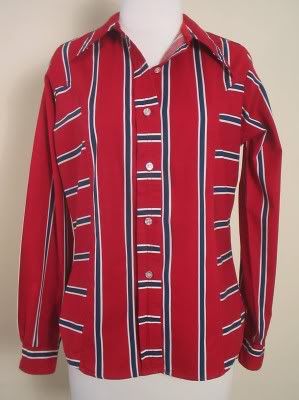
Strictly Mod shirt

As the decade progressed, subtle changes or extensions crept in. Jumpsuits were very popular, often for night wear in discos. These were one piece zip front outfits, in all types of fabrics and colors. Polyester became the material of choice for these "catsuits" and the leisure suits for men. We have one jumpsuit currently in Heffy's store, very indicative of the style:


Perfect for dancing
They are still "in", we can't seem to keep them very long before someone snatches them up! Empire waist dresses, halter tops on shirts and dresses, and floral prints continued the popularity started in the '60's. Skirt lengths were all over the place as minis, midis and maxis prevailed. Here are 2 very '70's dresses:
Empire waist peasant maxi dress

Halter maxi

The disco suit look for men led to 3 piece suits being popular, with ever widening ties. The suits had wide lapels and flared pants. Some were in some pretty wild color combos and prints. It's no wonder a lot of people won't admit they ever wore '70's fashions! There just aren't many guys who say they ever owned a leisure suit or wore a 5 inch wide tie, but the pictures tell a different story. I really get a kick out of it! We lived it and of course we wore the current styles. Chunky shoes with platforms were a must for men and women for day and night wear.

Later in the '70's, caftans, muumuus, and ethnic prints and styles were big. People traveled more and fell in love with the clothing in other countries. Pants and pantsuits for women were seen everywhere. It was finally okay to wear pants for almost any occasion. Mix and match separates were available for the first time and helped make dressing easier. Many of the trends brought forth in the '70's are still around today-and thankfully some of them aren't!

Tuesday, September 23, 2008

On the Move

I have really enjoyed writing the blogs on fashion decades. I managed to go from the '40's through the '60's. I have been away from it far too long and I apologize. I am working on the 1970's, but have been slow because Becky and Heffy's Collections moved! We're not done, but most everything is at the new place. We're settling in and hope to be up to speed very soon. So stay tuned-the '70's will be along shortly!

Heffy's store hasn't moved, so please check out our vintage wares:

Perfect for fall '60's dress

Thursday, September 4, 2008

Be sure to wear flowers

A review of the sixties isn't complete without the hippies. This counterculture movement spawned a completely different dimension to '60's fashion. The hippies were the '60's beatniks, the flower children, and they literally danced to their own tune. In addition to the drugs such as LSD, psychedelic rock by groups like Jefferson Airplane, Big Brother and the Holding Company, and the Grateful Dead opened a whole new influence on American life. Whether the style was an accident or deliberate, the hippies introduced a casual dress that was pretty much integrated into the mainstream culture by the '70's.

Both men and women sported long hair. Bell bottom jeans became popular along with peasant shirts, dashikis, and tie-dyed clothes. The colors were bright and vivid. Long flowing skirts and vests were big. The hippies enjoyed taking cues from other places and Native American, Asian, African, Indian, and South American motifs were frequently worn.

The most important aspect of the hippie movement is the legacy it left in fashion and many other parts of our culture. In fashion, the colorful and often ethnic clothes stayed and are still popular today. Ties began their downturn and a much more casual look became acceptable. It continues still. Do your own thing man, do your own thing.

Here is a sampling of the "hippie style":
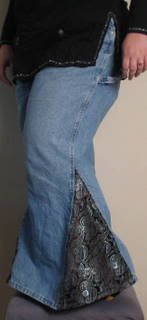
Becky in her own bell bottoms
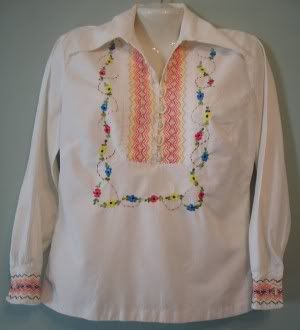
peasant shirt at heffyscollections

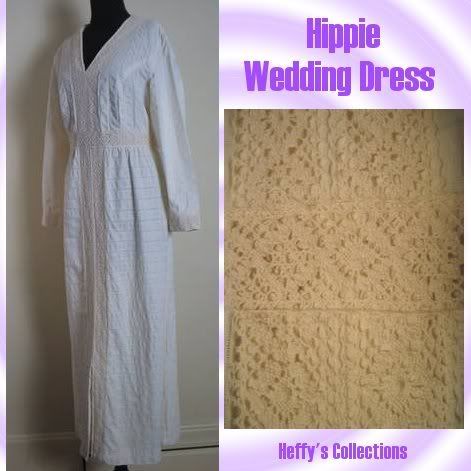
a beautiful hippie dress
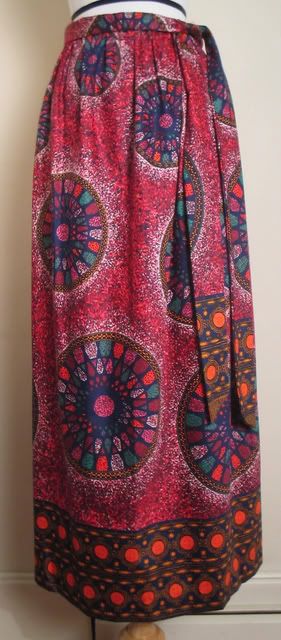
ethnic skirt

Note: I have been asked to add information on the title of this blog. In 1967, John Phillips wrote a song to promote the Monterey Pop Festival. That song was "San Francisco (Be Sure to Wear Flowers in Your Hair). Scott McKenzie recorded the song which was an instant hit. Many people who went to San Francisco did wear flowers in their hair and carried flowers they gave to others. They were dubbed "flower children". The lyrics of the song start: "If you're going to San Francisco, be sure to wear some flowers in your hair". Peace.

Wednesday, September 3, 2008

The Sixties: Fashion in Flux

The "60's were a time of change. The beginning of the decade was a continuation of the '50's and the New Look Dior introduced stayed in fashion. As the decade progressed, a more youthful trend emerged and styles with it. The sack dress introduced in the fifties became the shift in the '60's and it really grew in popularity. The Paris designers are credited with bringing a shorter skirt that Mary Quant in London took and made even shorter. The mini became standard wear for the younger set and by the latter part of the sixties, with their moms as well. First, let's take a look at the early '60's.

Fashion continued to be influenced by couture. JFK's arrival as President put Jacqueline Kennedy in the public eye. She favored suits with 3/4 length sleeves and a very polished look. It was a continuation of the '50's Paris designer influenced look. Her popularity gave American designers a chance to shine. Oleg Cassini designed the sheath suits-a fitted plain dress with a boxy jacket and very little decoration. Jackie loved the look, so it became the thing to wear. Here is a gorgeous simple sheath of brocade:

vintage dresses at heffyscollections.com

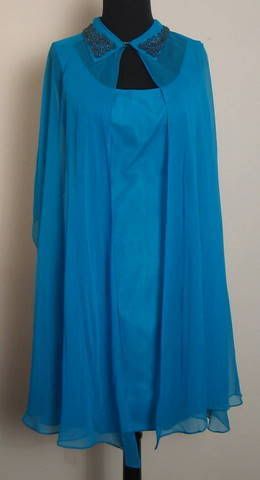
This sheath has a sheer cape over, adding drama to the style:

cerulean blue outfit

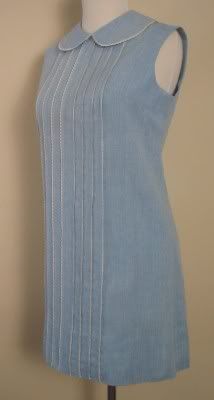
Slowly, as the baby boomers grew in numbers, a younger look evolved. The shorter skirts became the norm in length, becoming mini skirts, and dresses were usually a shift style or baby doll. Colors went wild, with bright prints and vivid palettes. Yves St Laurent brought the Mondrian look to shifts, a block color print based on the artist's paintings. Emilio Pucci did wild psychedelic prints. It was definitely different from the earlier '60's and '50's styles.


mini shift from the '60's

I can provide a slightly different perspective by taking a little walk through what we wore in the sixties. In junior high, I started wearing what was at the time a very collegiate look. Pleated skirts with buttondown or peter pan collared shirts with a sweater over top. The sweaters were crew, v-neck or cardigans buttoned down the front or the back. I don't know why we did it, but it was quite the thing to wear cardigans on backward buttoned all the way. Colors tended to be fairly straightforward, but new combinations were appearing. One of my favorites was pink with maroon. If we had realized it at the time, we were hedging toward the color explosion of the later '60's.

The skirts got shorter and shorter into high school when teachers started sending people down to the principal's office for a scolding and a trip home to change. The London look had arrived and we embraced it. Mod dresses, hip-hugger pants, wide belts, hats were all part of it. I don't think we realized how much our age group became the fashion trendsetters. This dress is mod with an op art print on the bottom. The dropped waist was a feature of mod styling.
mad for mod at heffyscollections

During this time, synthetics were gaining also. Polyester, acrylics, vinyl and many other synthetic fabrics were seen more and more. The easier care these provided made them popular very quickly. Op art, pop art, psychedelics, and space age prints were done in smashing colors and an array of materials. It was great!

Thursday, August 28, 2008

Fifties Fashions

Rosemary Clooney's "Come on-a My House" was #1 on the charts the day I was born. This happens to be the song that made her a star, an accomplished singer who performed for more than 5 decades. Since I managed to make it through most of the fifties, there is a lot I remember of it (not 1951 or 2 for sure). It's the first fashion era I have a memory of first-hand. Many people find their families to be "perfect", especially unable to see the flaws at a young age. Recognizing that fact, I still think my mother was perfect. And she was perfect for the fashions of the day. She was 5'6" tall and 110 pounds. The shirtwaist dresses, the sweaters, and many of the styles suited her figure beautifully. I thought of her as the ultimate picture of the '50's, surpassing even Harriet Nelson of "Ozzie and Harriet". I mention this because my mother's figure enhances my outlook of fifties fashion as very "stylish" even now.

The "New Look" introduced by Christian Dior in the '40's-flowing longer skirts, wasp waists and more feminine lines-opened the door to the fashions of the '50's. Accentuating the female figure was big and new undergarments became popular to add to the styles. Bullet bras (a cone-shaped cup), girdles, and corsets were the order of the day. They were the fifties "over the top" look. Over these delectable undergarments were the shirtwaist dresses, pencil skirts, and other items popular at the time. Pencil skirts were form-fitting straight skirts to the knee or just below. Since they were tight enough to inhibit a woman's ability to move, they became "wiggle" skirts. A shirtwaist usually has buttons on the top portion, like a shirt, with a full skirt. The skirts were held "aloft" with netting petticoats and crinolines. Some of the petticoats had boning to keep the fullness in them. The boning was ribbed and/or hoop-like for a bigger effect. They were belted to add emphasis to the waistline. Here is one of Heffy's shirtwaist dresses:
at heffyscollections.com

A similar look could be achieved with a full skirt like this one:
Rose print skirt

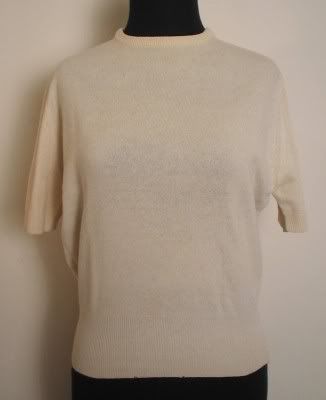
Skirts of all styles, full to pencil, were topped with sweaters we now call pin-up style such as this one:

Beige cashmere sweater by B. Siegel Co.

Peep-toe shoes and stiletto heels were very popular, adding to the feminine image. After the war, many women left the workplace and became stay-at-home moms (not a '50's term) and the original trophy wives. Women were expected to entertain and attend functions with their mates. The more accomplished they were at this, the better it looked for their men and the more it aided the male's career climb. Right or wrong, it was a popular view at the time. Many of you who remember the fifties may have a different vantage point. My mother worked and never wore heels, but I can see her friends arriving for Mother's Club or a card game in their party dresses and high heels. Peep-toes were my favorite!

During the fifties, Balenciaga designed the sack dress. This was a move away from the New Look drastic figure enhancement to a looser, less fitted style. These paved the way for the shift dresses of the '60's. Check back again for the Sixties blog.

Tuesday, August 26, 2008

1940's Fashion

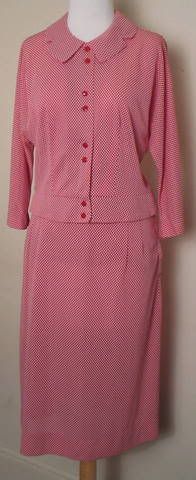
There were many factors at play in the '40's affecting the fashion of the day. In 1940, the US was coming out of the Great Depression and Europe was in World War II. As the war progressed, more countries were involved and rationing became more widespread. The rationing of all types of commodities including fabric caused people to cut back on their wardrobes drastically. Fashion was impacted by the shortages and the Forties style became a wide-shouldered look with a straight skirt. Frills were almost nonexistent. Clothing was functional and practical. Design elements like turn-back cuffs were eliminated to save material. This '40's silhouette is captured in this Heffy's Collections offering:

Red checkerboard suit

After the war, people were anxious to let go of the restraints imposed. Capitalizing on this desire, Christian Dior revealed his Corolle collection in 1947 and it was quickly dubbed "New Look" by the media. He featured a softer, more feminine style with long flowing skirts and a nipped waist which needed a corset. The new look took off, catapulting Dior to fame. This look continued into the Fifties.

Heffy's Collections has a "40's dress by Blakely that is really stunning. It is a departure from the early austere look, but not quite the flowing skirt Dior brought to fashion. It has exquisite details:

Check it out

For more information and pictures of 1940's fashion, check out Vintage Fashion Guild's timeline:

http://www.vintagefashionguild.org